
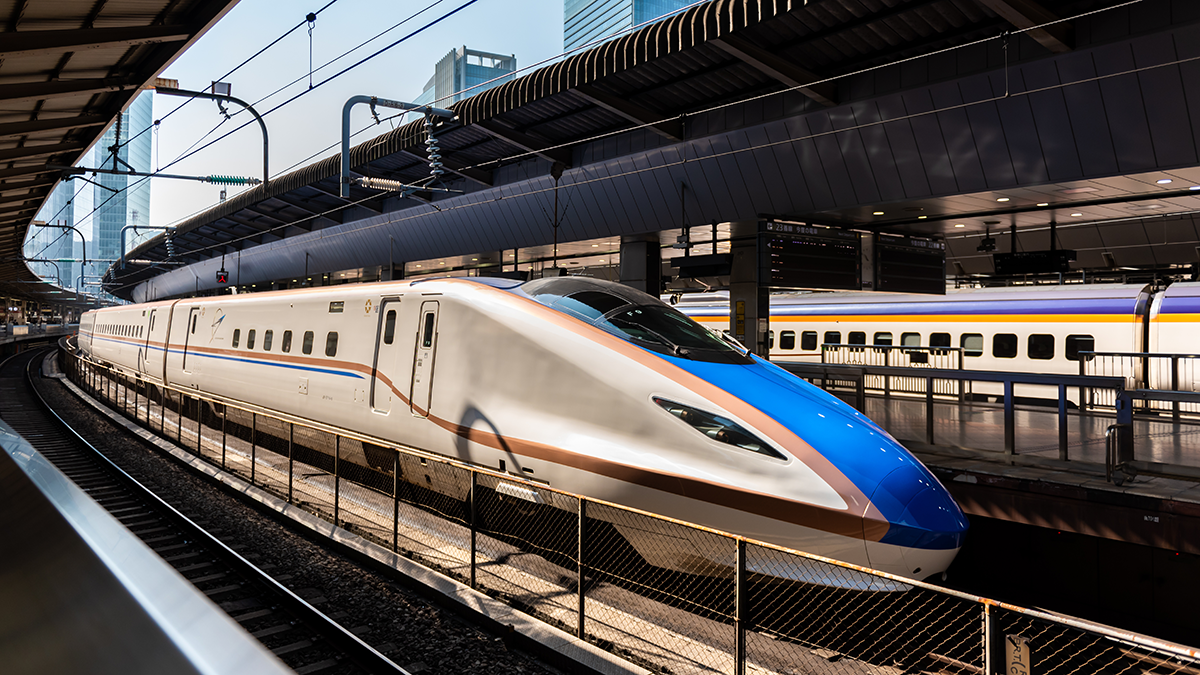
Digital Innovation in Rail Infrastructure
BLOG: Smart Railways – Data & Digital
Roman Groves – October 13, 2025
Read Time – 3 Minutes
Smart Railways – Data & Digital are driving a new era for the UK rail industry. With ageing infrastructure and growing climate risks, operators are turning to AI, sensors, and advanced monitoring systems to boost reliability, safety, and efficiency. From phasing out the legacy “yellow fleet†to testing real-time asset monitoring, these innovations show how smart railways are reshaping the future of Britain’s network.
Replacing the Yellow Fleet
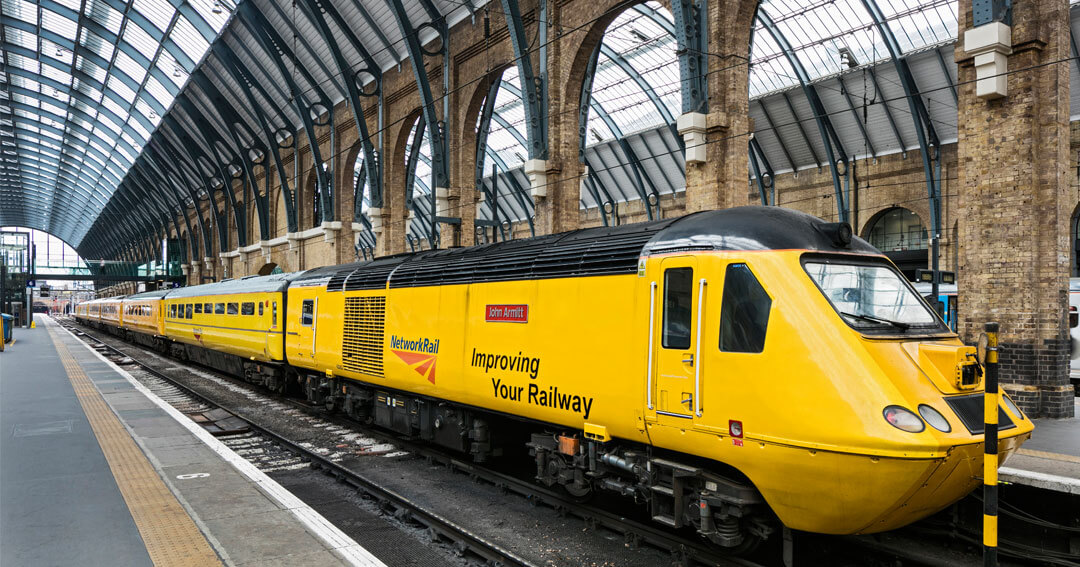
Network Rail has launched an ambitious £1.2–£1.5 billion programme to replace it’s ageing infrastructure monitoring fleet the so-called “yellow fleet†with a modern, data-rich solution. The plan is to procure an all-in-one infrastructure monitoring service spanning potentially 16 years, from 2027 to 2035 (possibly with extension), bringing together multiple modes of data collection. The new contract seeks to harness innovation by exploring non-train borne monitoring (drones, robotics, satellites) alongside train-based methods.
Source – Rail Business Daily+3Rail Magazine+3Railway Supply+3
Real-Time Trials & AI-Powered Monitoring
Trials are underway across several routes to test digital monitoring in action. On the East Coast Main Line, a collaboration between Network Rail, LNER, CrossTech, and Hitachi Rail has installed forward-facing CCTV (FFCCTV) and AI-enabled sensors in the driver’s cab of an Azuma train to monitor embankments, trackside vegetation, and other environmental risks in real time. These trials aim to detect hazards like overhanging branches or subsidence and allow earlier intervention, reducing delays, maintenance costs, and safety risk.
Source – Rail UK+2RAILMARKET.com+2
Data-Driven Risk Management Climate & Flooding
With extreme weather increasingly disrupting rails, data is no longer a luxury but a necessity. Network Rail is working with WSP to develop a national flood risk and coastal risk framework grounded in data analysis and predictive modelling. Instead of depending solely on regional reactive responses, this framework will seek to forecast flood risks, model likely impacts, and standardise responses across the country.
Source – RailTech.com
Transparency & Passenger-Focused Monitoring
Digital monitoring isn’t just for behind-the-scenes maintenance – it’s also enhancing transparency and passenger experience. From 6 March 2025, over 1,700 UK stations began displaying performance data publicly for the first time. Passengers can see how punctual their service is, cancellation rates, and how their operator is doing in reliability. At major stations this is via digital displays, and at smaller stations via QR codes. This is part of efforts to rebuild trust, reduce frustration, and hold operators and infrastructure owners accountable.
Source – GOV.UK+2Rail UK+2
Challenges & What to Watch Going Forward
While the vision is strong, bringing it all into practice involves challenges. First, the scale and cost of upgrading monitoring across thousands of miles of infrastructure is significant. Ensuring data quality, interoperability, timeliness, and then integrating it into existing asset management systems takes time and investment. The success of the new monitoring fleet contract. Depends heavily on suppliers’ innovation and the use of non-train borne methods, which are still maturing. Cybersecurity and data privacy will also be increasingly important as systems become more connected and sensor-rich.
Another area to watch is how predictive analytics and machine learning are used: tools like AI and sensors are great, but false positives, maintenance scheduling, staff training, and logistics must catch up. Also, balancing proactive maintenance with minimal disruption to regular services is non-trivial.
Conclusion
Smart railways are no longer future talk; they’re becoming central to how UK rail infrastructure is managed and maintained. With large-scale monitoring fleet replacements, AI-powered trials, flood risk frameworks, and increased transparency, the sector is embracing digital transformation. For companies, contractors, and tech providers. Aligning with these changes delivering scalable, secure, data-driven solutions will be key to thriving in the next phase of rail infrastructure.
View all of our services here – SERVICES
Want to learn more?
Lets grab a coffee!
We believe that the best way to build any working relationship is to first meet in person.
Please reach out using the contact details below, and we can arrange a time and place that best suits your schedule. We have offices in Portsmouth, Bristol and Ashford providing convenient locations for meetings.
Additionally, for our London-based clients, we frequently host meetings at an exclusive location within London City central, offering a professional and comfortable setting to discuss your needs.
How to reach us:
20, Hilsea Industrial Estate, Limberline Rd, Hilsea, Portsmouth PO3 5JW, UK
Call us on: 07453280857
Drop us an email: yani.groves@ic-group.co.uk