
Rail Project Management & Delivery Insights
BLOG: Project Failure vs Project Success
Roman Groves – January 12, 2026
Read Time: ~ 5 minutes
Delivering major infrastructure projects in the UK rail sector is complex, high-stakes, and increasingly scrutinised. The line between Project Failure vs Project Success is often defined by how effectively risks are managed, decisions are made, and teams collaborate under pressure. While some schemes are delivered on time and within budget. Others suffer from delays, cost overruns, or reputational damage. Understanding what separates failure from success. Is critical for clients, contractors, and supply-chain partners alike, and this blog explores the key drivers, lessons learned, and real-world examples from across the UK rail industry.
Defining Failure and Success in Rail Infrastructure
In rail and infrastructure terms, project success goes beyond completing construction. It means delivering agreed scope on time, within budget, with quality, safety and long-term performance aligned to stakeholder expectations. Conversely, project failure encompasses projects that don’t meet these criteria. Whether through delay, cost escalation, strategic misalignment or loss of public confidence.
The debate around High Speed 2 (HS2) illustrates the complexity. Once heralded as the UK’s flagship transport project, it has faced repeated delays, ballooning estimated costs, and strategic downsizing of its northern leg. The Treasury’s Public Accounts Committee has even described the programme as a “reputational risk to the UKâ€. Citing massive expenditure with uncertain outcomes.
These contrasting outcomes where some parts of the rail programme advance and others falter highlight that project success is multi-dimensional and influenced by governance, planning, resourcing and risk management.
Common Causes of Rail Project Failure
A range of internal and external factors can drive infrastructure project failure.
Poor governance and planning remain high on the risk register. Independent reviews of major UK transport projects have flagged critical issues in how complex programmes are overseen and structured. Suggesting that bespoke governance models are needed for projects of national scale rather than relying on generic frameworks.
Source: Institution of Civil Engineers (ICE)
Cost escalation and funding shortfalls also derail delivery. Underspends on some infrastructure budgets. Such as a reported £3.2 billion underspend in 2024–25. Have delayed investment in priority schemes like Northern Powerhouse Rail, raising questions about deliverability.
Meanwhile, scope changes and misaligned strategic objectives contribute to uncertainty in decisions and national debate over purpose. Big projects that evolve mid-delivery risk losing momentum, clarity and stakeholder confidence. Other causes range from resource shortages to weak asset condition assessment at the planning stage. Which can lead to significant time and cost impacts once work begins, or create prioritisation challenges.
What Success Looks Like: Principles from Well-Delivered Projects
Successful rail infrastructure projects are typically underpinned by disciplined, well-executed project management. Clear project definition and robust scope control at the outset help align objectives with realistic outcomes, reducing the risk of scope creep and maintaining delivery focus. Strong governance and leadership continuity are equally critical. With stable accountability and transparent decision-making tailored to the project’s size and risk profile an approach frequently highlighted by the Institution of Civil Engineers for complex programmes.
Proactive risk management and early scenario planning enable teams to identify and mitigate technical, financial, and regulatory risks before they escalate. Just as important is early stakeholder alignment, ensuring government bodies, contractors, and local communities share expectations and minimise disruptive change. Finally, data-driven monitoring and performance measurement provide real-time visibility of progress, quality, and emerging risks, supporting informed decision-making throughout the project lifecycle.
Case Studies: Lessons from the UK Rail Sector
Some UK infrastructure works demonstrate these success principles in action, while others show what can go wrong when fundamentals slip. On the success side, focused enhancements like the Midland Main Line overhead line upgrade reportedly delivered on schedule and within budget. Leading to faster, more reliable services a rare and positive outcome cited by sector commentators.
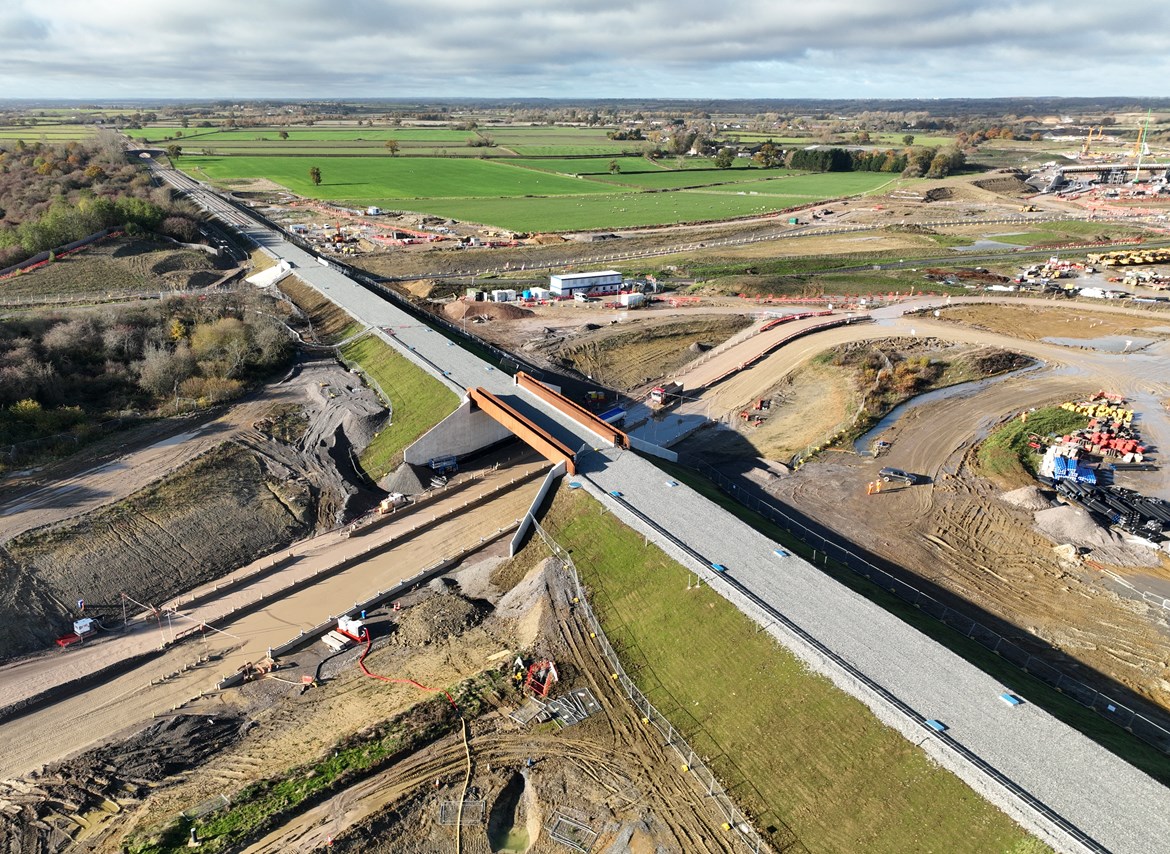
In contrast, the ongoing challenges with HS2 offer valuable lessons. Multiple delays, rising costs and political uncertainty have eroded public confidence. Independent scrutiny has highlighted governance weaknesses and the need for stronger project delivery frameworks at the outset not midstream.
Another high-profile project, East West Rail, has faced escalating cost projections and strategic realignments that underline the importance of early financial planning. Interdepartmental coordination and transparent stakeholder engagement.
Source: Railway News
Turning Failure into Success: Strategic Priorities for 2026
Looking ahead to 2026 and beyond, infrastructure leaders have a clear opportunity to apply lessons from recent project performance to drive better outcomes across the rail sector. This starts with investing in governance frameworks tailored to project scale and complexity. As generic models often fall short on megaprojects, creating friction and slowing decision-making. Equally critical is prioritising thorough asset condition surveys and risk assessments before construction begins, helping teams surface constraints early and avoid costly rework or escalation. Strengthening digital project controls, such as real-time dashboards, advanced modelling, and early-warning systems. Can further improve visibility and intervention.
Finally, consistent and transparent engagement with funders, regulators, communities, and delivery partners is essential to maintaining alignment and avoiding adversarial dynamics. Together, these priorities help shift the balance from project failure to project success, building confidence in rail delivery and unlocking the long-term value that well-executed infrastructure can achieve.
Conclusion
In the UK rail and infrastructure sector, Project Failure vs Project Success is rarely down to chance it is shaped by decisions made around planning, governance, risk management, and stakeholder engagement. High-profile schemes such as HS2 highlight how complexity can expose weaknesses when controls are insufficient, while other programmes demonstrate that disciplined leadership and clear structures deliver results. For clients, contractors, and delivery partners alike, the lesson is clear: project success is engineered through foresight, accountability, and proactive management, not hoped for after construction begins.
View some of our projects here: PROJECTS
Want to learn more?
Lets grab a coffee!
We believe that the best way to build any working relationship is to first meet in person.
Please reach out using the contact details below, and we can arrange a time and place that best suits your schedule. We have offices in Portsmouth, Bristol and Ashford providing convenient locations for meetings.
Additionally, for our London-based clients, we frequently host meetings at an exclusive location within London City central, offering a professional and comfortable setting to discuss your needs.
How to reach us:
20, Hilsea Industrial Estate, Limberline Rd, Hilsea, Portsmouth PO3 5JW, UK
Call us on: 07453280857
Drop us an email: yani.groves@ic-group.co.uk